


Are you planning a trip to Paris? Excited about everything the city has to offer, but nervous about getting around such a large city? Paris offers a wide variety of transportation services, and understanding how each one works can save time, money, and stress during your trip. For instance, the tram is really only useful on the outskirts of the city. The buses are very well connected, but can be stuffy. The Paris Metro is one of the oldest public subway systems in the world, and incredibly well maintained (but that doesn’t mean it can’t feel confusing or even downright overwhelming if you’ve never used it before).
Planning ahead and using the right combination of transportation methods will help you make your time in Paris even more enjoyable - and that much less stressful, too!

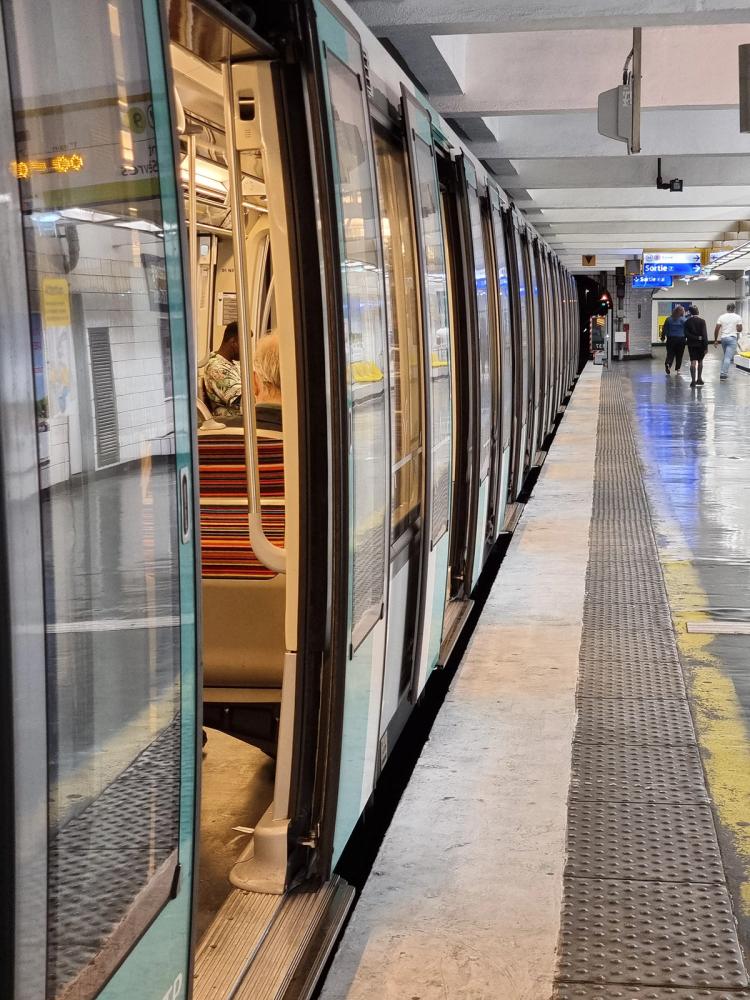
How to Know How To Get Around In Paris
In this article, we’ll share with you the various methods of transportation around the city. We’ll tell you how to get your metro, bus or tram tickets, how to navigate the city, and even advice on avoiding pickpockets. There have been some big changes to the Paris transportation system in recent years and even locals are still figuring them out. You’re in the right place!

Is It Easy To Get Around Paris?
100% yes! Paris is a very easy city to get around. If you’re a lover of walking, you can even walk to pretty much anywhere you need to go - it’ll take a few hours and you’ll get tons of steps in, but it’s technically possible.
But walking aside, this city is so interconnected that you’ll be able to get anywhere you need to go at almost any time of day - things get a little trickier at night, considering the metro does close, but we’ll cover that as well. In general, barring any roadworks or exceptional changes, the Paris transportation system is easy to navigate, boasting clear signage, color-coded lines, and minimal wait times.


Looking for even more tips and tricks to prepare for your trip to Paris? You can keep reading our blogs as they drop here, of course, or follow us on Instagram, but if you want all your information in one place, why not grab our Guide?. The Paris in My Pocket travel guide has everything you need to prepare for your trip and fantastic advice for where to go once you're here. We guarantee the best possible time in Paris, or your money back.

How To Get Around Paris France - Different Modes of Transportation
Here is a list of all the modes of transportation you can expect to encounter in the city.
Public Transportation
- Metro + RER
- Bus
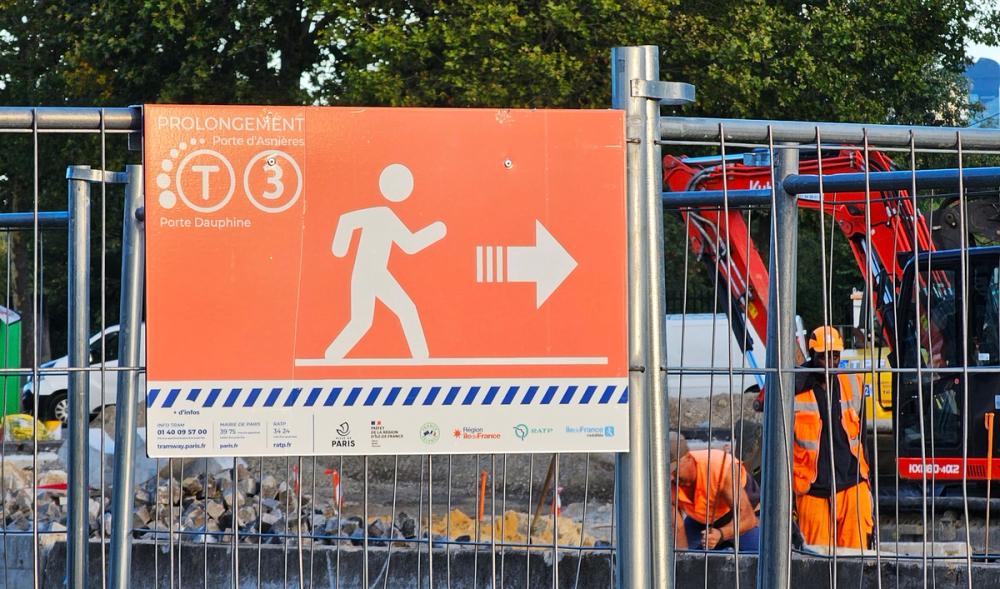
- Tram
Private Transportation
- Private car, Taxi or Uber/Bolt
- Moped or motorcycle
Personal Active Transportation
- Walking
- Biking
- Scootering
Since 2023, Paris has banned scooter brands from dumping their scooters on the sidewalks of the city to rent. After too much hassle and too many accidents, Paris nixed it. That said, scooters are still allowed - you just have to ride your own or rent one from a private, local company (and isn’t that always better anyway?).


More About Public Transportation In Paris
Of everything listed above, your best friend will be the public transportation in Paris. Why? Because eventually your feet will get tired. Or perhaps you don’t want to bike up Montmartre. And because private cars and cabs are expensive and clog up the roads. Here’s some helpful information to know about each type of public transportation in Paris.

Metro & RER Trains
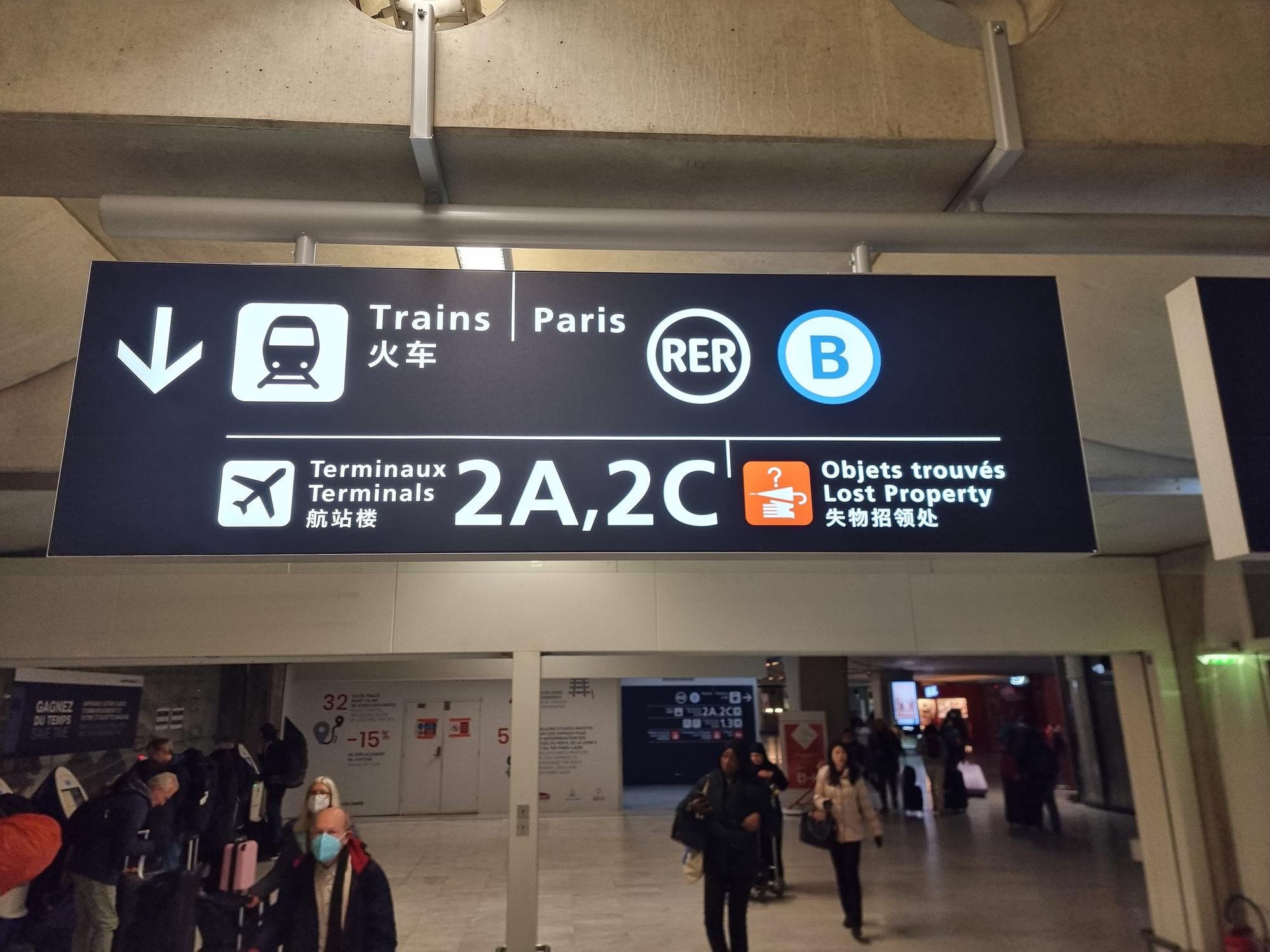
The Metro and RER trains are the underground public transportation system in Paris. The Metro runs in and just beyond Paris into the suburbs, with many different stops. There are 16 lines and counting. The lines are denoted by numbers.
The RER are slightly larger trains, some even double-decker. They might have only a few spread-out stops in Paris but reach far beyond Paris into the greater Île-de-France. They’ll get to places like Versailles. The RER lines are designated with letters.
There are regional trains that extend further beyond Paris into Île-de-France as well. These are known as TER trains, and exist all over France as local trains. They will stop only at actual train stations and can be a good solution for day trips that are further away, like Provins.


Bus
The bus system is extensive in Paris, with over 60 bus lines operating in the daytime inside Paris, and another couple hundred in the suburbs. Buses have many stops, allow you to see Paris as you roll by, and are highly accessible. Be aware, you’ll have to buy your bus-specific tickets on your phone or Navigo Easy card ahead of time - they are different than Metro tickets (see below). Always say hi to the driver, and hold on, because the rides can be a bit lurchy.

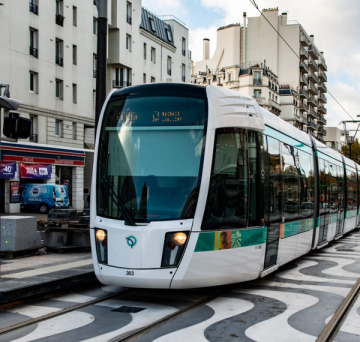
Trams
Trams are a smooth and solid solution for getting around in outer Paris. Most tram lines run next to the periphery of the city, allowing you to continue traveling around the outskirts of the city very effectively, rather than having to take the metro in and change lines. Tram tickets are the same as bus tickets, and you can even transfer between the two. You cannot transfer to the metro on the same ticket.

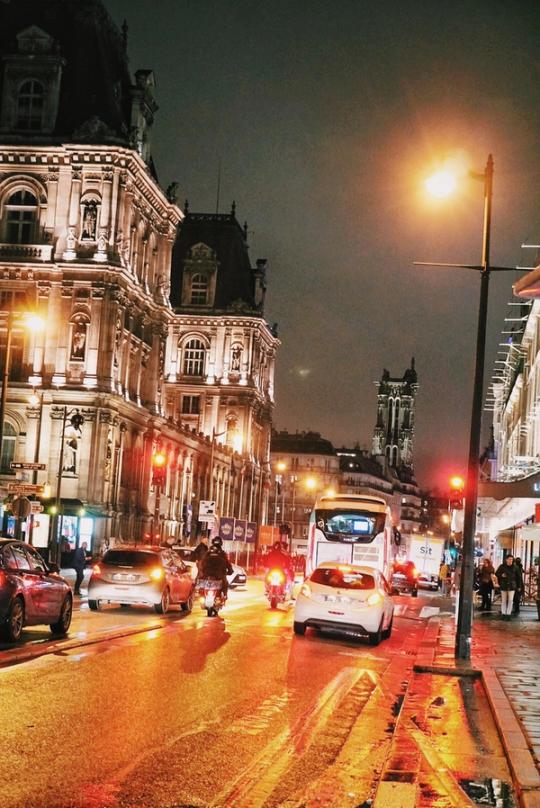
Night Buses (Noctilien)
Night buses are an adventure, and one we’d generally advise against unless you have no other option. It’s great that they exist during the off-hours of the daytime buses and the Metro lines (just past midnight to about 6:00 am), but they’re a bit grim, and the women on our team haven’t always historically felt safe. We’d advise not taking the night bus alone. If you’re solo traveling, try to get home before midnight or take a cab.


Guided Fun Around Paris
Want to ride a bike or motorcycle around the city, but not sure where to rent or how to start? Here are our top recommendations. There is a bike-share scheme called Vélib’, but if you need a bike for the day, we recommend renting one from Le Peloton Café.
And if you’re looking for full pre-made itineraries, we’ve also got you covered there! The Paris in My Pocket Guide+ comes with three (and counting!) full-day itineraries of Paris, from breakfast to late-night drinks, with sights, food, and coffee in between. We currently offer A Day in Montmartre, A Day in the Marais, and Paris for Book Lovers. In addition to this, the Guide+ gives you access to an audio-guided tour of the Canal Saint-Martin. And of course, as usual, you’ll have access to all of our Base Guide articles, interactive maps, and recommendations.

How Much Does It Cost To Get Around Paris
Once upon a time, metro and RER fares would often differ from each other depending on where you needed to take the RER. Great news - that’s changed! Now every metro or RER ride in the Île-de-France region is set at a fixed price. That’s right: if you need to take the RER out to Versailles, for example, this will no longer cost you more.
One ticket equals one ride, set at €2.55 for the metro, RER, and trains within the region (with the exception of airports) and €2.05 for the bus and tram (as of summer 2026).
Reduced Fare ?
Think you should buy the reduced fare? Chances are that you shouldn’t. Reduced-fare tickets are primarily for children or people who have special documentation allowing them to use the reduced fare. Don’t be tempted by the lower price - you will be ticketed if caught.
Airports
The Airport fare. Even though Charles de Gaulle Airport and Orly Airport fall on RER and Metro lines respectively, don’t be fooled; they have a specific price associated with them. You’ll want to go onto your ÎDF Mobilités app or to a ticket machine to buy your airport-specific ticket. Ignorance is not bliss, and you will be fined otherwise.


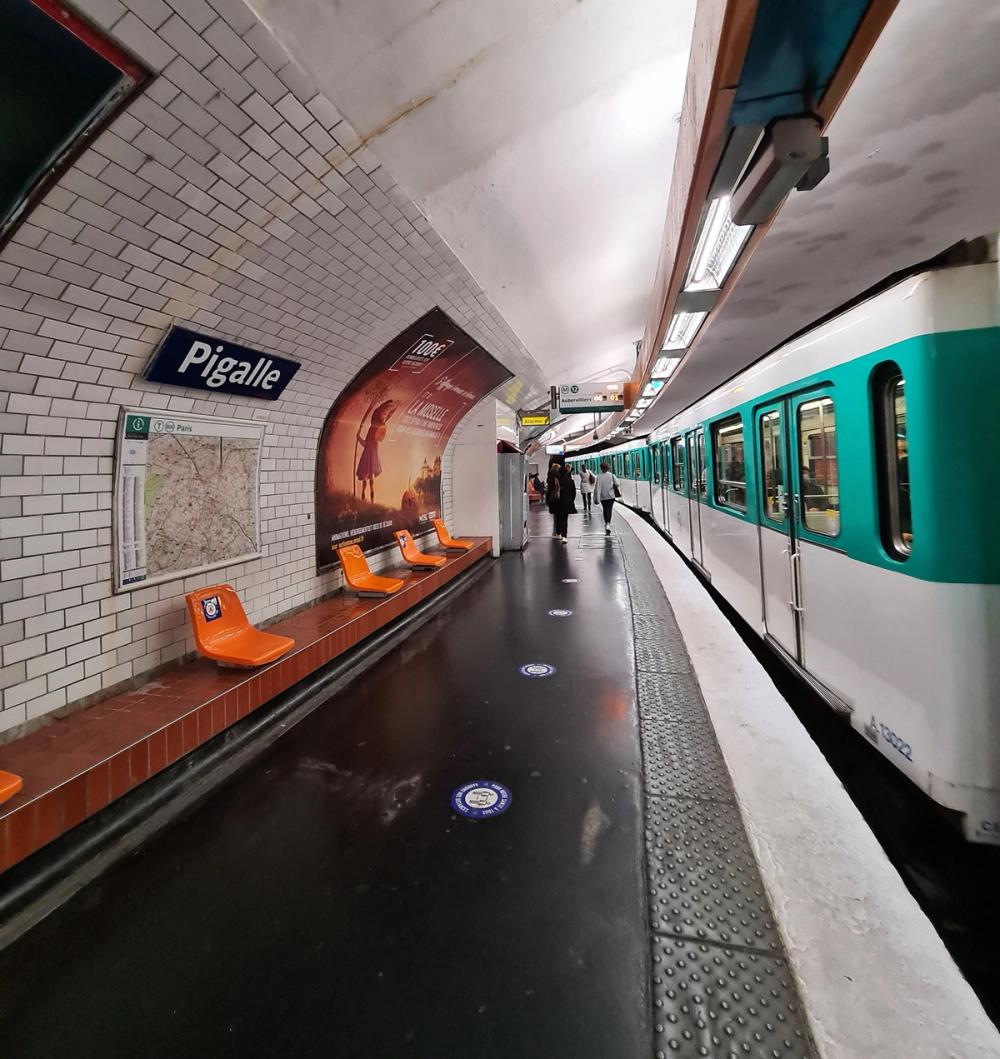
Paris Metro Guide For Beginners
The Metro is the best way to get around, both on and off the beaten path - it can take you from the Eiffel Tower to local hidden gems in no time at all.
If you prefer your information in video format, we’ve got you covered there:

Planning your Itinerary
Before you even head to the Paris Metro, you’ll want to plan your route, and Citymapper is our preferred app for this - much better than other map apps. Citymapper gives you real-time updates about delays so you’re less likely to end up stuck on a line that isn’t moving.
Out and about and worried about getting service to use Citymapper? Make sure you have data with an eSIM. We always get one while traveling and highly recommend it. Affordable and easy to use, an eSIM will keep you connected on your trip.

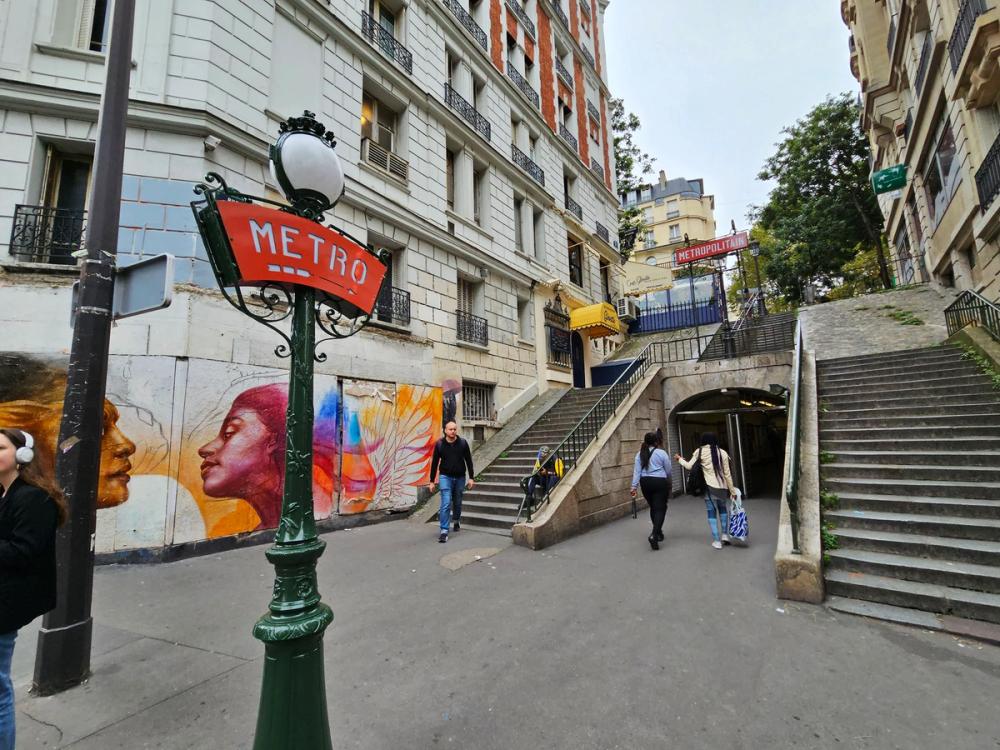
Finding your metro station
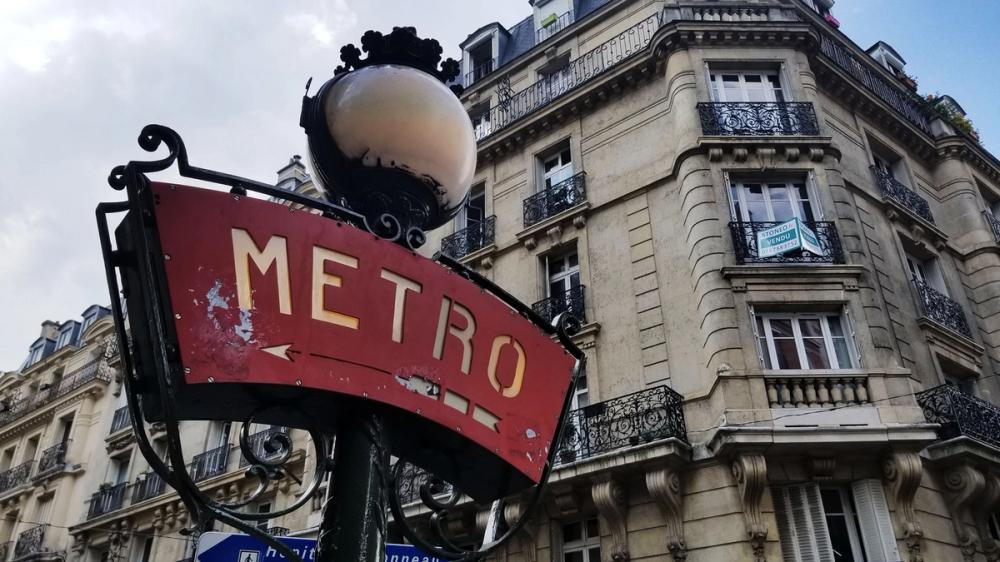
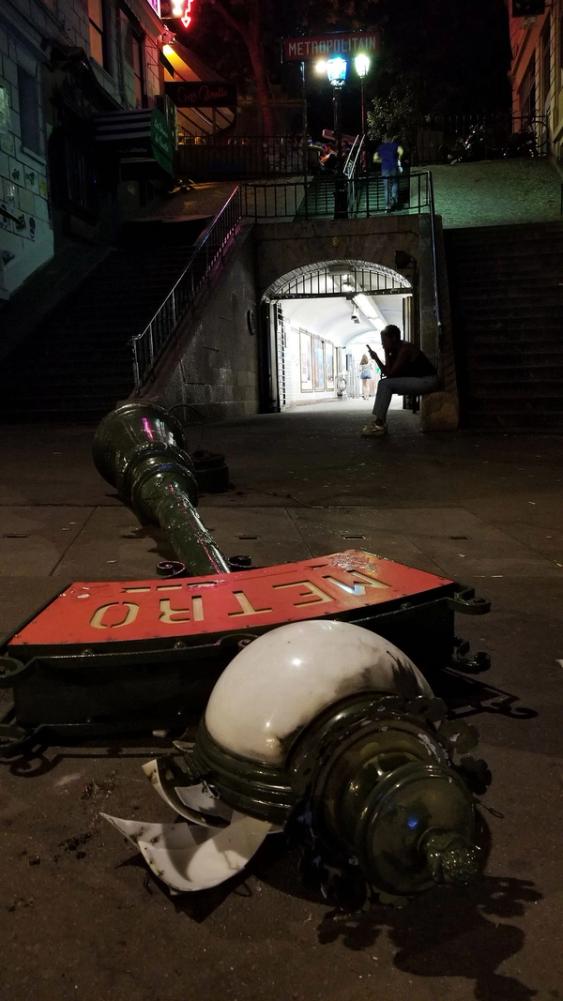
There are two signs that are really important when looking for a Metro station. The first is the big aboveground sign that signals a station exists - these often look like big yellow M’s in circles, white text on bright red, dark green Art Nouveau arches, or even occasionally like ads.
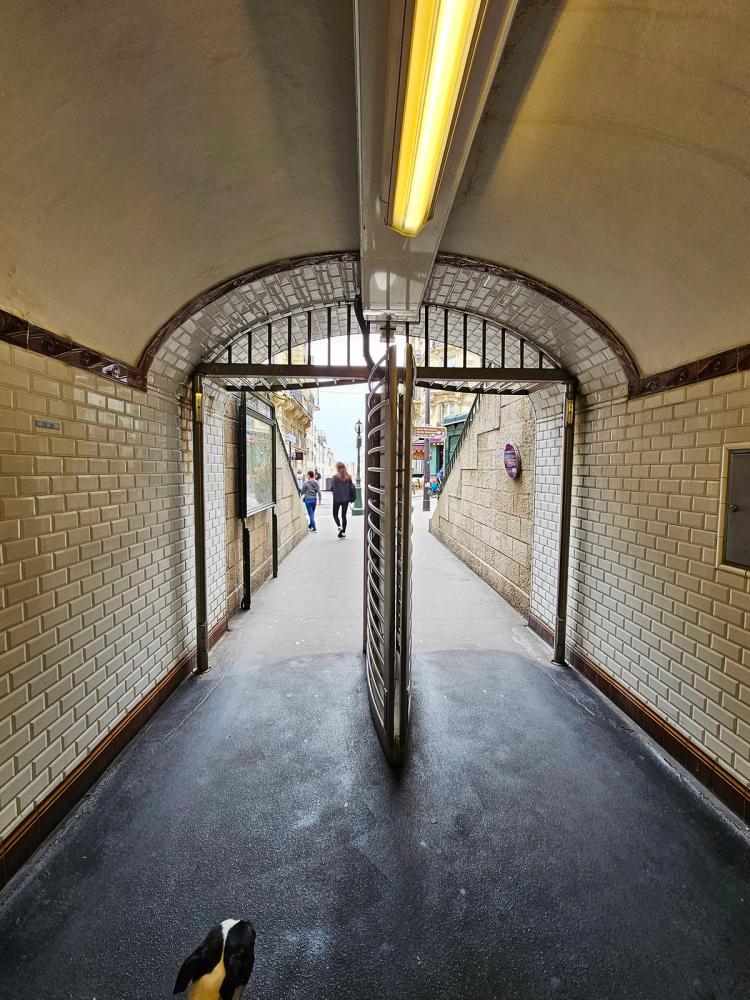
Before descending the stairs, look out for a sign with a ticket and a red line through it. This means you cannot enter this station if you don’t already have a ticket (we encourage you to always have one ahead of time). While you can buy metro tickets at any station you visit, each station has multiple entrances, and not every entrance has a ticket machine. The red line through the ticket sign means there’s no way to buy tickets through this particular entrance.

How To Buy Metro Tickets In Paris
Are paper tickets still used in the Paris Metro? The short answer is no; the long answer is that if you have some left over, you can still use them until the fall of 2026, but they are no longer for sale. They have been replaced in favor of the Navigo Easy pass.
Our Recommended Passes
Since paper tickets are no longer available, we recommend a pass called Navigo Easy, a refillable card. You can buy the physical card at the ticketing kiosks in the metro stations and add up to 10 rides. Unfortunately, the “carnet of 10” (discounted packs of 10 tickets) has been phased out. You can still buy 10 tickets at once, but they’ll be full price. Then use the ÎDF Mobilités app to recharge it with tickets whenever you need. What’s even better is that you can buy and add tickets directly to your phone without the physical card and add them directly to your digital wallet.
But what about a week pass or a day pass? Unless you know you’re going to be taking at least five trips per day, there’s hardly any benefit to day or week passes in our opinion. You have to be especially careful because weekly passes do not start on the day you buy them - they’re Monday to Monday, regardless of the date of purchase. Too much of a hassle, if you ask us!
Where to Buy Your Pass
If you want a physical Navigo Easy card, you can buy one at the machines located in every metro station. If you run into any trouble, go directly to the window with the helpful staff member on the other side. Just say “Navigo Easy, s’il vous plaît” and you’re off to the races. These folks are very helpful, assuming they’re available (we’re still in France, after all!).
But if you get your Navigo on your phone in advance, it’ll be stored in your apple wallet, and you can go straight to the train. Refill your tickets on the go and skip the line. This is particularly helpful if you’re traveling into Paris by way of a major hub like Gare Montparnasse or Charles de Gaulle airport. Getting your tickets on your phone ahead of time will help you skip the lines once you’ve arrived.

Entering the Metro
These are changing a lot across Paris, but the concept will be the same. If you see glass, approach the ones with green arrows and place your Navigo card or your phone with the Navigo card open onto the Navigo patch to the right of your door, then head through.
If someone tries to scoot in behind you, watch your stuff, but be aware that fare jumping happens all the time. It’s not a big deal; you can let someone through and you won’t get in trouble. They’re the ones who will pay the fine if they get caught.

Navigating Metro Signs
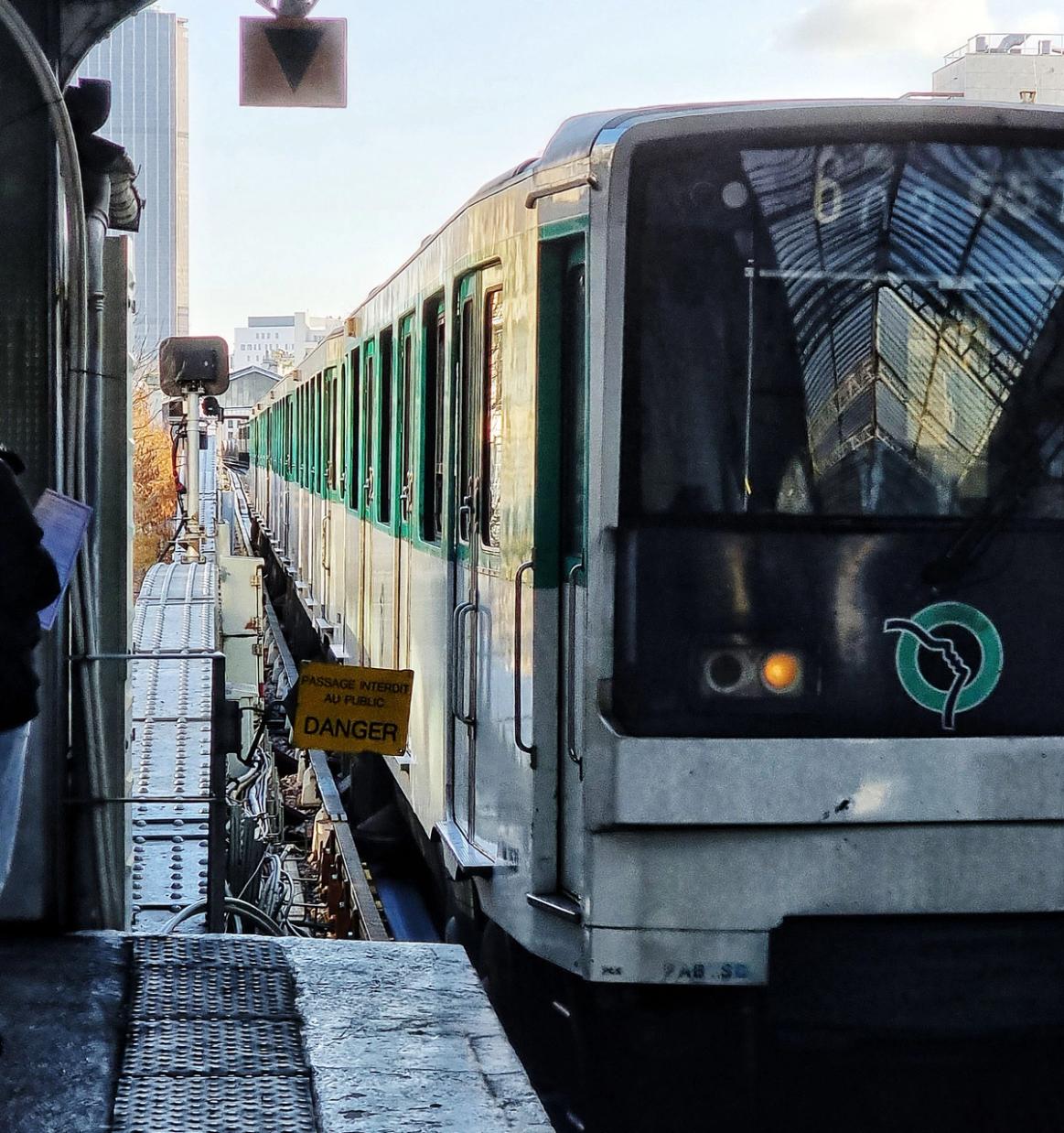
Inside the metro station, follow the signs for the metro line you want. If you’re taking Line 5, for example, look for the orange circles with a 5 inside. Follow those. At some point, you’ll see two options, and the signs will split. The options are designated by the final stop on the line, in either direction. Thankfully, you’ll find a more detailed sign allowing you to double-check which direction you need to go. It’s always good to double-check this. On these signs, you’ll also be able to see where your options are to change lines. You’ll also be able to see this on signs in the metro to keep track of where you want to go.
A note about stairs in Paris
The Paris Metro is notorious for its lack of accessibility, notably for those with limited mobility, families with strollers, or those traveling with large pieces of luggage. Even if you’re walking, if there’s ever an elevator, take it (here’s looking at you, Montmartre!). An elevator means there are likely hundreds of stairs. For more on accessibility in Paris, check out this guest blog written by a Paris accessibility expert.
Alright, but how do we know where we’re going? All Metro trains should have a line map above the doors that shows you every stop along the way. On any of the last few generations of trains, these will light up to show you where you’re going and be dark where you’ve been. As you approach the next station, its light will start to flash. Some new trains have digital screens that will give even more information, including exits and transfer points. If there are no lights or you’re feeling uncertain, just look out the window at each stop and you’ll see where you are.
On the platform, there are a few signs that are really helpful. The first is for transfers - if you’re looking to hop on another train, you should see the symbol for the metro line you need on the platform, indicated with an arrow. Follow that sign, and keep right.
The most important sign is the exit. Exit signs are dark blue with the word “Sortie” printed on them. In small Metro stations, that will be it—just one “Sortie” sign pointing the way and everyone walking in that direction. In bigger Metro stations, each exit will have a name and a number. There’s a map on the platform that will show you where each exit spits you out, but when in doubt, just get out. You can reorient yourself aboveground.

Etiquette
- When you’re boarding a Metro train, stand just off to the side of the door to let anyone exiting get off first.
- Once the path is clear, get on and KEEP MOVING. Don’t stop as soon as you cross the threshold, as there may be people behind you.
- Folding seats can be used as long as the metro isn’t crammed full of people. If you see a reserved sign, it’s a seat intended for anyone with special needs, so you’ll be expected to offer it up to anyone with mobility needs.
- Don’t eat or drink in the metro.
- When disembarking, same as before: keep walking. Head all the way to the opposite wall to pause and get your bearings. Do not block the flow of traffic.
What about staying cool in the metro?
Some metros have air conditioning and some do not. There are plans to equip the entire metro network with a cooling system by 2033. In the warmer months, you’ll see many Parisians with hand fans trying to stay cool. During especially hot days where the air quality is at its worst, the metro is free to discourage driving.
Transfers
You can transfer between metro lines without re-validating your ticket, unless part of your transfer requires an RER stop, in which case you’ll need to scan again. Don’t worry, it won’t use another ticket. Your scanned ticket is valid for 90 minutes, and that’s more than enough time to get where you’re going.
Sometimes you’ll be stopped by an RATP agent asking to scan your ticket. Acquiesce - it’s all good. They’re just looking for people using reduced-fare tickets who shouldn’t be, or people without tickets at all.
If you transfer to the RER, you will have to use your Navigo to switch into the RER system AND exit it.


Staying safe (& avoiding fines!)
Here are our top tips.
Don’t get pickpocketed
- Don’t hang out with your phone in your hand
- Use anti-pickpocket technology (like a bag or a pair of jeans)
- Always keep your hand on your bag, and put your backpack in front of you on crowded trains
More on avoiding pickpockets in this video:
Don’t get ticketed
- Don’t put your feet on the seats
- Don’t buy reduced-fare tickets
- Don’t raise your voice at an RATP officer
- Always scan your ticket when you enter the metro system


What Time Do Paris Metros Operate?
The Metro opens at 5:30 am daily. Each line finishes its last journey around 1:15 am, which means you’ll want to plan for about 12:30 am or earlier to catch those last lines. On Fridays and Saturdays, this is extended by one hour.
During the day, trains run every 3–5 minutes, barring exceptions and delays. If you’re traveling at peak rush hour, be aware that certain trains at certain stations might be so crowded that you have to wait for a couple of trains to pass before you can board. Try to plan accordingly.
There are exceptions to the rule: For Fête de la Musique, New Year's Eve, and other citywide events, the metro may remain open all night - but only on certain lines, so be sure to confirm this before you head out. Citymapper will typically remain updated for events like this, so again, we recommend downloading that app. We have several apps that we recommend you download before you go - find them all in our Paris Guide, along with dozens of other articles on how to prep for your trip to Paris, and how to have the best possible time and stay safe once you’re on the ground here.